
Moving Images in China 1988-2011 in Prato: a superb exhibition of Chinese contemporary art
- When
- Where
- Prato
The Luigi Pecci Centre for Contemporary Art in Prato, in collaboration with the Minsheng Art Museum in Shanghai, presents the first major exhibition on the history of Chinese video art:
Moving Image in China 1988 - 2011. A selection of more than forty works that trace its birth and development, from the first video made by Zhang Peili in the late 1980s to one of the latest major productions by international star Yang Fudong.
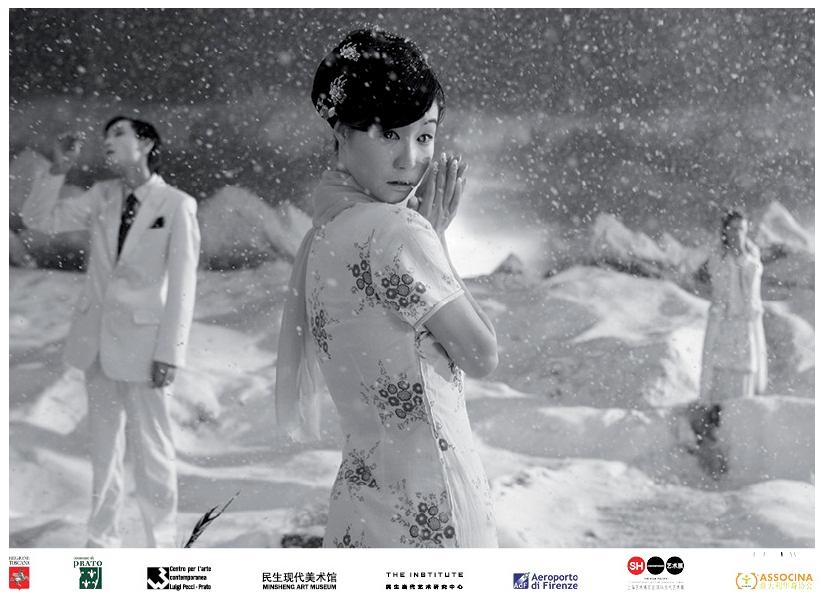
The exhibition is promoted by the Tuscany Region and the Municipality of Prato, in collaboration with The Institute Minsheng - Beijing, Florence Airport, SH Contemporary – Shanghai, Associna.
Almost fifty years have passed since the first experiments with video appeared in the West, and today it is, in effect, one of many media used by artists. The situation is quite different in China, where the possibility of using video technology is a relatively recent phenomenon with no more than twenty-five years of history. Even today the debate on the concept of video art is a key issue for Chinese artists and, as the title of the exhibition states, it extends to the moving image because, from the outset, their research engaged with the increasingly mature languages made available by new technologies (animation, digital art, etc.).
Moving Image in China 1988 -2011 offers Western audiences an unprecedented journey through the works of the leading video artists, including, besides the aforementioned Zhang Peili and Yang Fudong, Cao Fei, Qiu Zhijie and Wang Jianwei. More generally, it presents the rise of new media with a strong inclination towards poetry, typical of this culture, and suggests possible future directions through the presence of the youngest representatives of the genre, such as Lu Yang, Chen Zhou and Wang Sishun.
The exhibition, curated by He Juxing, Guo Xiaoyan, Zhou Tiehai and Marco Bazzini, is divided into four sections that retrace the development of Chinese video art from the late 1980s to the present day, presenting itself as one of the most comprehensive and systematic exhibitions on this phenomenon.
1988 - 1993: Media criticism and biopolitical reflection
From the late 1980s to the early 1990s, in China too television became the most popular medium, quickly turning into the main source of entertainment. Yet for many artists 1990 is remembered as the year of media transformation, the starting point for a revolution in artistic language.
The work 30x30 by the artist Zhang Peili, which opens the show, was the first video in the history of Chinese art and was presented for the first time in 1989 at the China Avantgard exhibition. In the same period, Yan Lei and Qiu Zhijie, also interested in video art, proposed and practised new creative possibilities of the medium. Through a more critical approach towards television, already dominant over the masses, these early artists regarded political reality as an invisible network that
uses the media to express, and at the same time conceal, its ideological content.
Video thus became a means of awakening awareness in Chinese art. Despite technological difficulties and problems in obtaining materials, these artists continued to use the medium systematically, emphasising its critical character.
1994 - 1999: Grammatical analysis and the formation of video In the 1990s, an interdisciplinary culture embodying a universal meaning began to influence Chinese art circles, bringing with it a completely different vision, presented through new media. At that time in China, artistic creation based on video, photography and cinema was going through a very favourable moment. The media revolution took place around 1994, but only in 1996 did genuine artistic production emerge. Artists realised that the video camera was not only for making films or documenting events, but above all a recording device. In the process of creation and reflection, they discovered that – as a language – the media themselves stimulate people's thinking, and so they began to pay attention to the visual effects of the filmic dimension, as well as to reflection on the temporal aspect. In these years Chinese video art began to capture the attention of the international art community thanks to the many exhibitions held in Beijing and the participation of more than thirty artists in the Video Art Exhibition in 1997, which became an important springboard for the Chinese art community.
Key artists: Zhou Tiehai, Ellen Pau, Chen Shaoxiong, Jiang Zhi, Lin Yilin, Wang Jianwei, Wang Gongxin
2000 – 2005: Consciousness, poetics and sensitivity in new media practice
With the advent of the information technology revolution in 1998, video art was enriched by various practices.
One group of artists demonstrated the strength of their social ideology in their artworks, using reverse interference in social space and in the media. The various figures of the art scene created cultural marginalisation and underground events.
Using the language of documentary, on the other hand, another group deliberately mixed film and video, exploring emphasised visual languages to analyse the narrative possibilities of the medium. This was an unprecedented recognition of the media.
Key artists: Tsui Kuang-Yu, Gu Dexin, Lu Chunsheng, Yang Fudong, Zhou Xiaohu
2006 - 2011 Limits: the moving image diversifies
At this point the new medium became an important platform with its own characteristics but increasingly tied to technological development, thanks to which Chinese artists took full ownership of the new language. They began a discussion on the current state of Chinese video art and on the connections between filming, drawing and installation. Creative work thus developed in different directions, showing how different practices can change the meaning of transmission and how video art is opening up more and more to experimentation.
Key artists: Chen Chieh-jen, Cao Fei, Hu Xiangqian, Huang Ran, Feng Mengbo Sun Xun,
Zhang Ding
The exhibition was presented last September in Shanghai at the Minsheng Art Museum, which produced it in collaboration with the Luigi Pecci Centre for Contemporary Art in Prato.
MOVING IMAGE IN CHINA1988-2011
Twenty years of Chinese video art
He Juxing, Guo Xiaoyan, Zhou Tiehai and Marco Bazzini
22 April – 29 July 2012
Exhibition Halls
Luigi Pecci Centre for Contemporary Art
Viale della Repubblica 277 - Prato
Saturday 21 April 2012, 5:00 pm