
Ustation in Naples - Internet for Peace!
- When
- Where
- Naples


Only now do I find a moment's respite to continue the account of what took place on 5 May 2010 in room 1.1 of the University of Naples "L'Orientale".
I won't bore you with the usual summary article: that's what the videos are for!




I wanted to answer some of the questions raised by the audience, in particular the Chinese girl who came to study in Italy with the "Marco Polo" programme and asked me whether there is censorship in Italy or not: here, recently, on the legislative level blogs have been put on a par with online news outlets - so in essence they run as much risk as a journalist registered with the professional order together with their company - which covers them legally. The truth is that almost all bloggers are perfectly ordinary people who would never dream of starting a defamation lawsuit. Social networks such as Facebook or YouTube adopt an internal policy to avoid and prevent any lawsuit - they urge their users to report spam or irregularities, and the removal of content is not specifically justified; they don't even leave traces online. I can say that freedom of thought is limited by a legislative landscape not very inclined to protect the end user. In Italy there is freedom, but it comes at a very high cost, economically speaking. 99% of us are unable to handle a lawsuit. We also talked about it in the debate on the Raitre programme Report: an excellent television project with low costs but with the torment and perpetual risk of lawsuits, that is, money to be paid to defence lawyers (borne by Raitre's management) and loss of time, as well as money.
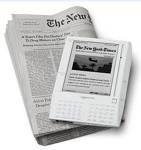
And that young man who wanted a social network where teachers could share teaching materials? Careful, here we're playing with fire: indirectly it harms the interests of textbook publishers! The future is surely beyond paper, or with paper in a more marginal role, but for that to happen content must still be valid and verified (going back to the importance of checking sources in newspapers, stressed by Francesca Caferri of Repubblica). It's unlikely that people will share perfect manuals and instructions at the first attempt; it's easier to imagine it as a school Wikipedia, with disputes, discussions, controversies and some historical falsehoods. Publishers must be encouraged to focus on digital media (see the e-readers arriving in computer shops), cut costs by eliminating paper, and channel their efforts into an iTunes for school textbooks. This seems to me a more realistic and sustainable scenario, with its pros and cons :)
To conclude, I'll reply to a few Twitter messages, where I was rapped on the knuckles because Hong Kong supposedly isn't part of the People's Republic of China: legally it is an autonomous district, annexed since 1998, which is going through five decades of transition from autonomy to full reintegration into the general system. What does that mean? That until 2048 this autonomous local government (together with its twin Macao) is taking its steps in view of this future scenario.
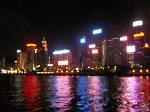
The point is simple: it's 38 years, which in modern Chinese society is an enormity; what for us is a generation is for them an epic. Great changes lie ahead, curiosity is high, and observing the subtle differences in approach to the global economic market reflects different shades of theories applied to reality.
Hong Kong unconsciously lives its glossy freedom with books in English, TV with entertainment programmes closely aligned with Korean/Japanese trends, and the internet (where Google has left its last detachment in HK and removed the CN localisation; at the moment Google.com and .it are still accessible!). They are not in the least aware of these differences between themselves and mainland Chinese - what matters is that prosperity and the growth of the property market and of the Hang Seng stock exchange can increasingly give this former British colony a central internal role.

Hong Kong manages to set philosophies of success and international market relations, even though the spotlight is on the Shanghai Expo - the island of Kowloon is the favourite destination for domestic and foreign capital investment. The new tycoons invest in this strip of land, feeling safer in the face of a stable and flourishing economic and political system. Reading between the lines, Hong Kong aspires to the role of teacher on this path towards 2038. So remember this date: we in the West are special spectators, we have the opportunity to draw on various journalistic and industry sources (alas, mostly in English).

For You, on the other hand, who followed the whole debate (live or via streaming), the only real obstacle for young people - I'll be tedious in repeating it - is mental laziness. Clear away your mental cobwebs and use the web with a new and proactive approach. The future of Web 2.0 is that content comes from You.
Ustation gives you a platform visible to mainstream media while at the same time letting you manage it on equal terms with other users / competitors. I hope Romeo Perrotta agrees with this statement :) I thank everyone who attended, in particular Professors Anna de Meo and Massimo Pettorino for their kindness and the success of the conference, Riccardo Luna, editor of Wired (whom I could only see on video), Carlo Massarini and Carlo Infante for the lessons in modern journalism and the transition from radio/TV to the web, the Repubblica journalist Francesca Caferri for opening new perspectives for me on the Arab world in the age of Twitter, and of course Romeo Perrotta with all the staff behind Ustation (in particular Lisa Accordi).
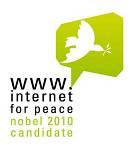
So let's wait for 21 September 2010, the date on which the celebrations for the nomination of the Internet for the Nobel Peace Prize will culminate, news that Riccardo Luna of Wired shared with us in preview right in the Skype videoconference - this is the beauty of the World Wide Web! In the meantime let's all cheer together, TogethER and Associna!
Sun Wen-Long